


18+years
Of hands-on SEO — from the early link era to AI Overviews, done by me rather than delegated.
I'm Paul Gordon — a freelance SEO consultant with 18+ years of hands-on experience helping ecommerce brands, local businesses and established companies grow their rankings, organic traffic and revenue. Technical, ecommerce and local SEO — with AI search now built into everything I do.
No sales team — your enquiry comes straight to me.
18+years
Of hands-on SEO — from the early link era to AI Overviews, done by me rather than delegated.
SEO & AI search
Good SEO = Good AI SEO
700+
Businesses helped — ecommerce brands, local firms and established companies.
Semrush
Certified Agency Partner
1/1
One consultant from first call to delivery. No account managers, no juniors.
Real results
Case studies
Real, up-to-date case studies.
Signals — useful, not the goal
The bottom line
Enquiries, sales and revenue.
Google Search, Google Maps, AI Overviews and AI assistants. One joined-up SEO approach, handled directly by me.
SEO and AI search belong together — not in separate packages.
Contact meBefore touching a page, we talk. I get to know your business — what actually drives success commercially, the history of the site and brand, what's been tried, and where things genuinely stand today. From there we set out what's realistically achievable over the short and medium term, and take a proper look at your competitors. That conversation shapes everything that follows.
Google search is still important — but chasing position one for a single keyword isn't the primary goal it once was. It's one part of your footprint to success. For many local businesses the map positions carry real weight, and AI-driven maps are now emerging alongside them. Some of this will matter more to your business than others — working out which is part of the job.
This space is changing drastically, and it isn't about gaming the system with tricks anyone can copy. Performing here means understanding how these systems fan out queries, then making everything — from the website at the bottom to the brand at the top — as strong as it can be. The key is tracking: what the LLMs in your niche actually show and cite across consideration, comparison, purchase and brand. From there, we build a clear path towards it.
Bing and the smaller search engines still generate direct sales, referrals and visibility — and I'm sure I'm not the only SEO who'd say they shouldn't be overlooked any more. Writing this in 2026, I'm seeing a small but growing share of Bing referrals across client accounts, particularly in ecommerce. It's a fraction of the whole, but it's real — and it's increasing.
One ranking is only a snapshot — and your brand can now be found in so many places: Google organic, Maps, AI Overviews, AI assistants, Bing, paid search, Shopping. All of it assists the same goal: converting. If that sounds less stable than the old "rank number one" world, you're right. The job now is positioning yourself to improve your chances in every moment you might appear — so I measure your share of visibility across an agreed sample of searches, platforms and periods, alongside real enquiries and sales.
You get the same reports I work from. Every number shows where it came from, which dates it covers and how it was measured. Good months and bad months sit side by side — I don’t pick the flattering bits, and I won’t promise a fixed position.
Anonymised reporting examples — static snapshots, not live data.
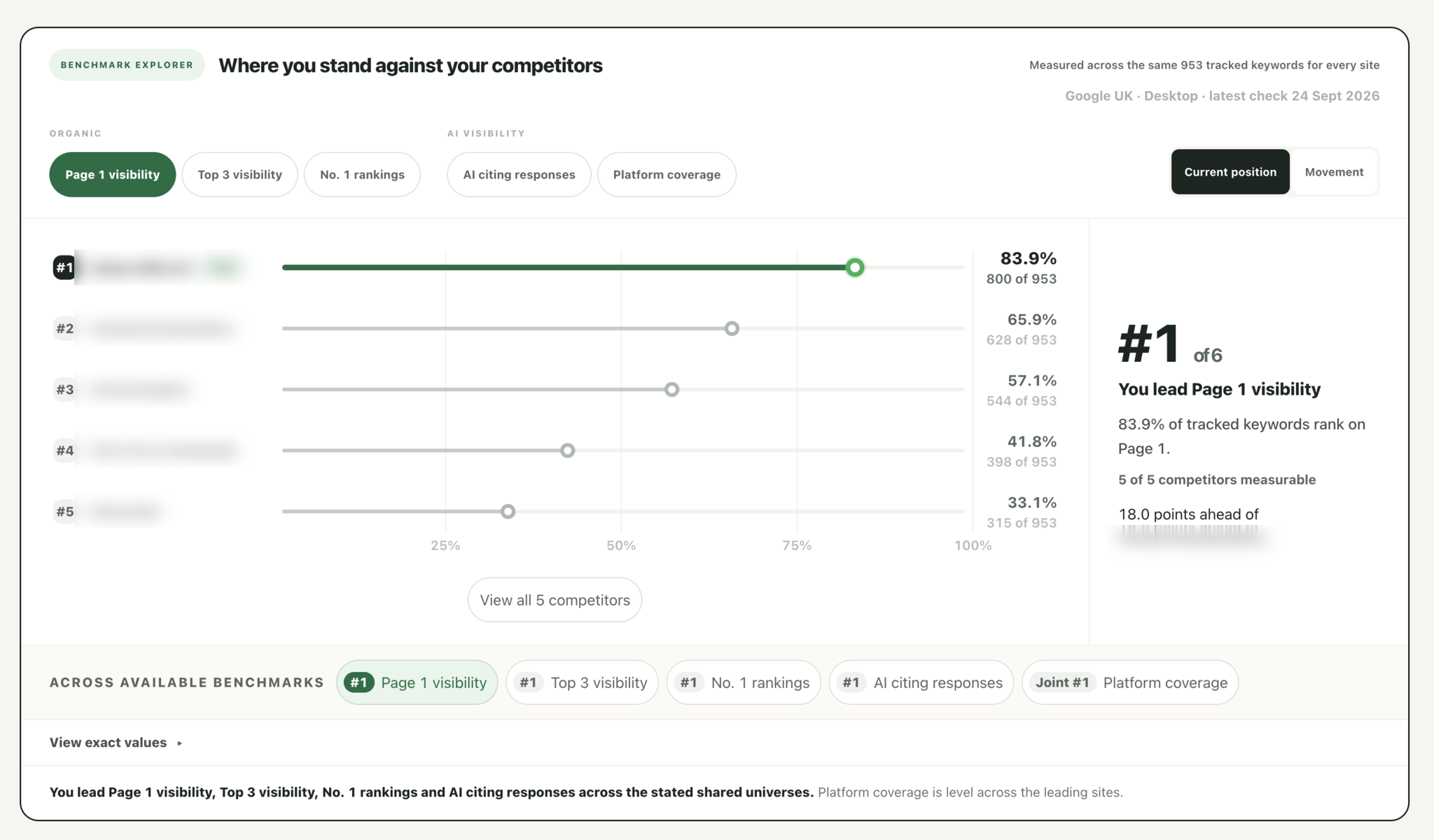
See how your visibility compares with competitors using the same tracked keyword set. This example covers Google UK on desktop, checked on 24 September 2026 — not every country or device. Client and competitor names have been removed for privacy.
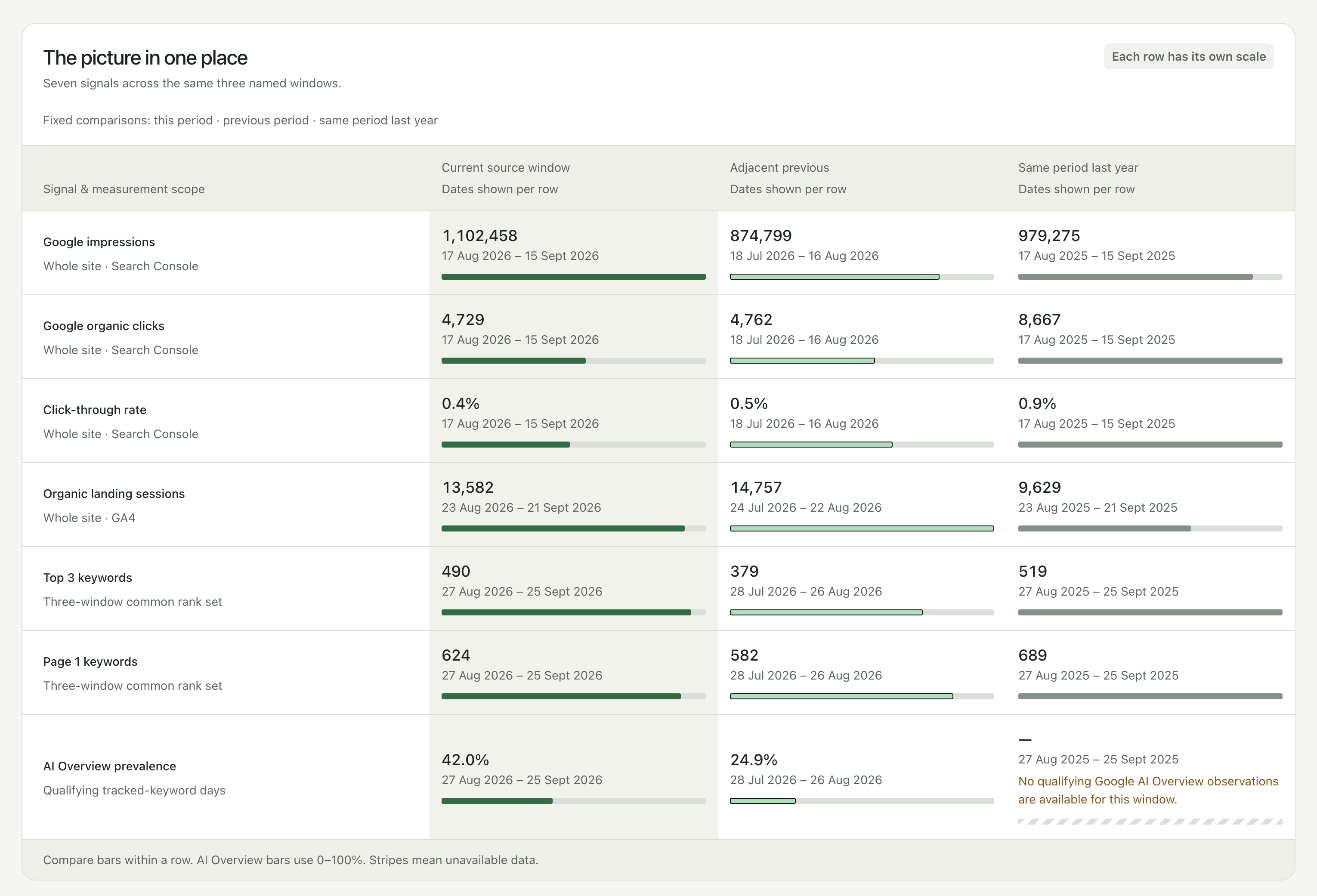
Each source shows its own dates — Search Console, GA4 and rank data don’t refresh on the same day. Every row has its own scale, so compare bars within a row, not across metrics. Drops stay in (clicks and CTR are down on last year), and the gap with no data is labelled, not hidden. AI Overview prevalence counts qualifying tracked-keyword days, not brand citations.
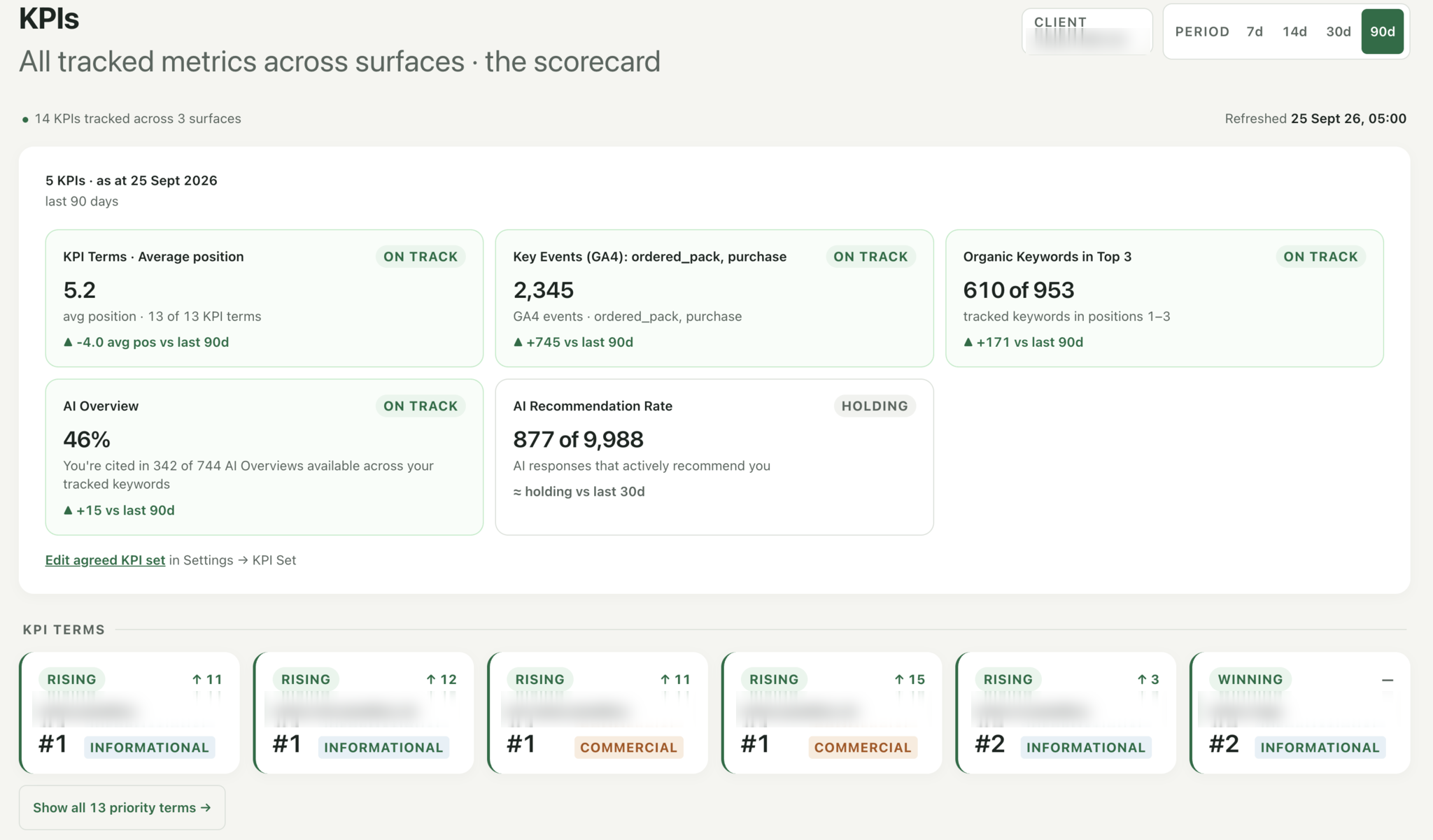
An agreed scorecard keeps the focus on what matters to your business. Search visibility, conversion events and AI discovery sit together, with the reporting period and movement shown. Client details and individual search terms are hidden here, while the measures and their context remain visible.
See how different channels contribute to conversions, purchases and revenue — including organic search and AI assistants. Illustrative event label changed. Your report uses your own agreed conversion definitions.


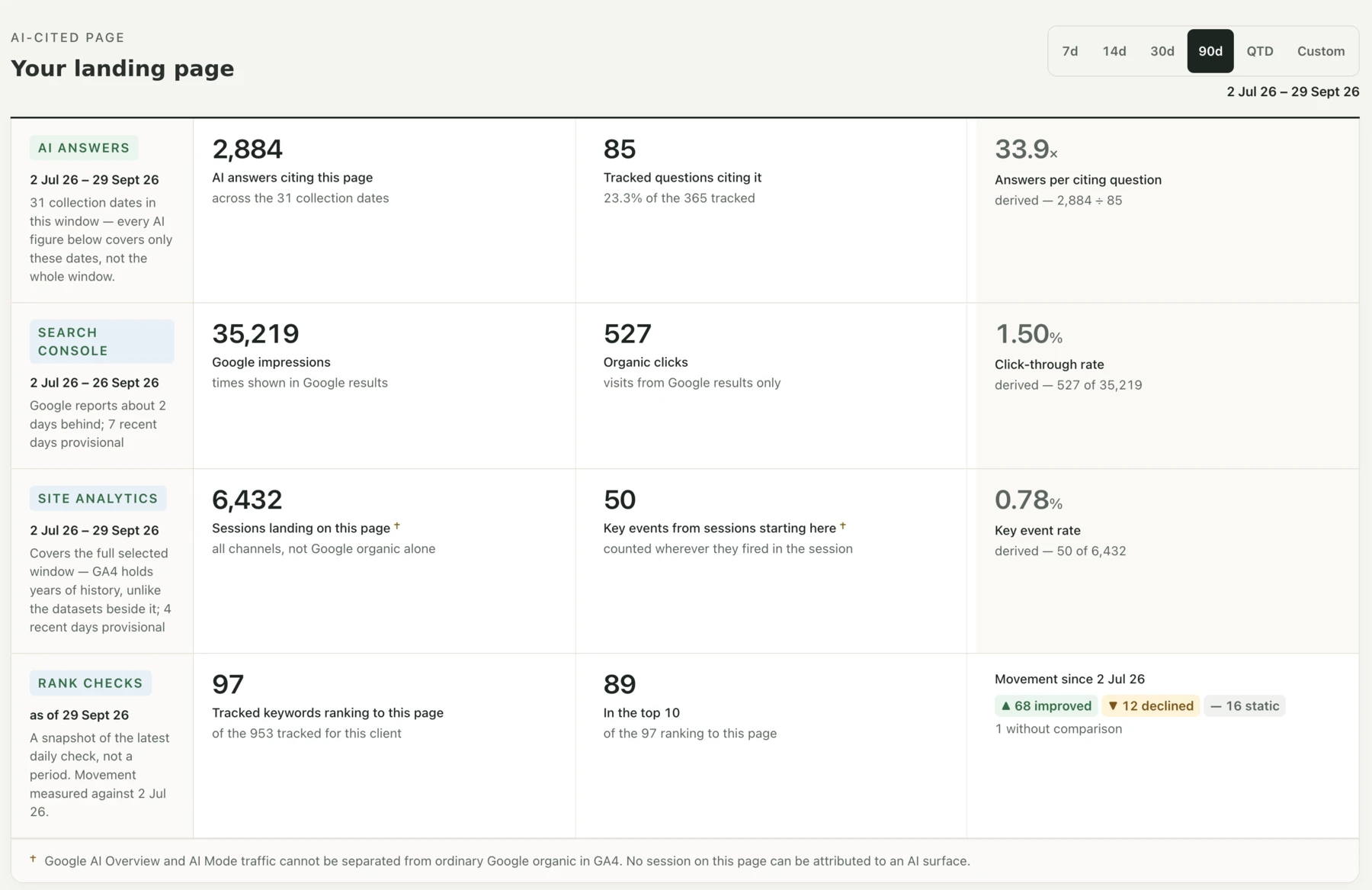
A page can rank on page one without bringing you meaningful results. Rankings matter, but they are only one part of the picture. I bring AI answer citations, Search Console impressions, clicks and click-through rate together with analytics sessions, key events and keyword movement — so we can understand what the page is actually doing.
AI answers are probabilistic: visibility can vary between questions and runs. A citation isn’t a visit, and a visit isn’t a conversion. These sources cover different windows and can’t always be joined into a single journey. You get full transparency into the data we can measure, its limits and what it means — not just a ranking report.
Every business comes to me with a different problem — because every business is different. There's no point chasing a vanity keyword just because it has volume: if the intent doesn't convert, you're pushing a performance metric, not the bottom line. It's not about position one — it's about where your brand is being seen across all the different areas of search. These are the areas I help with most.
SEO Consultancy
Maybe you have an in-house marketer, an agency or a developer already doing the doing. I'm not there to tell anyone they're doing it wrong — I'm a second pair of eyes and an honest second opinion. Oversights happen to all of us; it's about adapting, and how the data is managed. From there we open a dialogue: what to test, and where to focus next quarter.
SEO ConsultancyEcommerce SEO
With ecommerce, the first job is making sure everything is technically sound. Once it is, your products have more opportunity to be seen everywhere — organic, Merchant Center, paid, the lot. Alongside that I look at the UX and the funnel, so you convert as well as you can — even if that means capturing a lead first, depending on your product range.
Ecommerce SEOShopify SEO
Shopify does a lot for you — but handled incorrectly, it quietly costs visibility. There's a checklist I work through to make sure everything's sound: collections, URLs, theme, apps, structured data. It's about getting the right foundations in from the off, aligned with what you want the store to achieve — and I know where the platform bends and where it doesn't.
Shopify SEOTechnical SEO
Crawl waste, indexing gaps, slow templates — with modern tools, finding these is quick, and most people can. The skill is what happens next: putting it all together, directing your development team properly, and implementing it myself where I have to. With the right guidance, technical SEO is one of the fastest areas of modern search to get right.
Technical SEOLocal SEO
Local search keeps changing — maps, AI maps, results shifting with where the searcher is standing. The job now is knowing where you show over a period of time, not one given day, and tracking where your conversions actually come from. It doesn't need to be complex — but it does need to be reactive, not monthly box-ticking, because what gets presented changes constantly.
Local SEOSEO Audits
Anyone can run some sort of audit through an AI tool now — not perfect, but it gives you an idea. Where it gets challenging is complexity: the bigger the site, the more experience matters. The real point of an audit is making better-informed decisions — a migration, a new build, or simply optimising better in search — with evidence behind each one.
SEO AuditsWebsite Migration
Migrations are about mitigating the risk to your visibility. Moving Magento to Shopify, say, brings turbulence — you're forced into collections and new URL structures. What matters is redirect mapping done properly, and staging re-crawled constantly as your development team makes changes. Keep the path clear — redirects, pages and content in line or better — and it's more straightforward than it sounds.
Website MigrationAI SEO
AI assistants have been part of search for a while — you might just be thinking about it now. I've been testing this heavily since last year, watching the trend emerge. It takes patience: once you understand what's being cited, who your competitors are and the gap between you, you can build towards real visibility. And credibility counts — a poorly reviewed brand will struggle here.
AI SEOYou won't get a dedicated account manager here — because you won't need one. There are no layers between you and the person doing the work: as an independent SEO consultant, I set the direction, analyse the data and deliver it myself. And because I only take on a handful of clients at a time, you get my full attention rather than a slice of a team's.
I've been doing this for more than 18 years, and the job keeps changing — AI-driven results now sit alongside traditional rankings. Being on page one isn't the whole picture any more. I look at where your business needs to be seen across search, then connect the work to what actually matters commercially: enquiries, sign-ups, purchases and revenue.
You'll have a tracking portal that keeps performance transparent — what's winning, where things have dipped and what's changed. Even good SEO moves around as Google's algorithms and results evolve. I watch for that, explain what it means and adjust the work where needed. I don't guarantee rankings, because nobody honestly can. What you get is experienced delivery, clear reporting and a considered response to whatever search does next.
For ongoing work, I ask for two months' notice if you want to pause or stop — it lets me plan the remaining work properly and keep my client list small. Sprints and one-off projects follow their own agreed scope.
Jewellery brand: 0 to 900+ page-one keywords — from invisible to category leader in 12 months, then a US launch on the same foundations.
Recruitment agency: top-three rankings up from 13 to 75 — owning the searches that bring in both clients and candidates for a national specialist agency.
Clothing brand: sustainable ecommerce growth — reducing paid dependency with a scalable SEO and content framework.
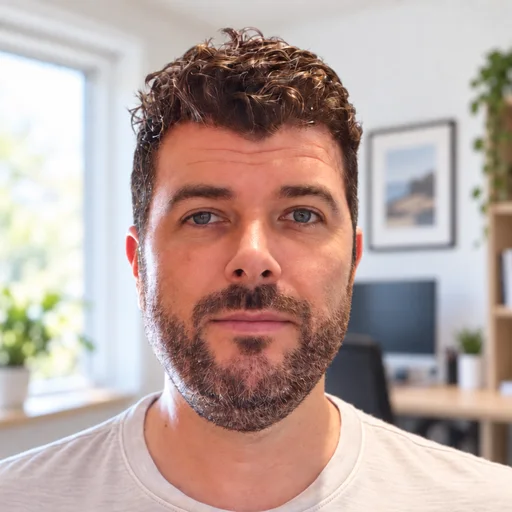
I'm Paul Gordon, a freelance SEO consultant with more than 18 years of hands-on experience and over 700 businesses helped. I do the work myself — no juniors, no outsourcing — and I've kept my expertise current as search has shifted towards AI-driven results. What you get is clear, honest work tied to the commercial outcomes that matter to your business.
More about my careerA no-pressure chat about your business, your market and where visibility is falling short — in Google and in AI search. I'll review your current setup, flag the low-hanging wins, and outline a clear direction. No fluff, no guesswork.
Once the plan's agreed, I get to work: technical fixes, content improvements, structure, tracking. Done by me, not outsourced.
I monitor what's working across Google, AI search and your actual conversions, and fine-tune every month. Long-term growth, not short-term spikes.
You work directly with me — a freelance SEO expert with 18+ years of hands-on experience, applied to your business with an approach that keeps evolving alongside AI search. I only take on a handful of clients at a time, so you get direct access to the person doing the work, a clear view of what matters commercially, and none of the layers or noise that can come with an agency.
We have a proper call every month, where you speak directly with me about the work, what's happening in search and what the data is telling us. Between calls you'll have reporting and access to a tracking portal, so you can always see what's going on.
SEO is not just about being on page one. It is about being seen across the places your customers search and connecting that visibility to commercial outcomes. Depending on your business, those could be form submissions, sign-ups, purchases, revenue or meaningful engagement. Those are the events I want us to understand and measure, rather than treating rankings alone as success.
Yes. My reporting and tracking portal give you visibility of what is working, what is not working and what has changed — not just the positive results. Even with good SEO, performance can dip as Google’s algorithms and search results change. The important thing is being aware of those changes, explaining them clearly and being proactive about the response.
For ongoing SEO, we have a straightforward agreement asking for two months’ notice to pause or stop. That lets me reserve capacity and plan the work properly. If we have agreed a particular sprint, such as three months of focused work, or a one-off project, that follows its own agreed scope instead.
Ongoing payments are set up through GoCardless Direct Debit. You complete the Direct Debit setup using your bank details, rather than card details. Separately agreed sprints and one-off projects follow their own agreed payment arrangements.
Get a straight answer on what isn't working and what it takes to fix it. Every reply comes directly from me.
No sales team - your enquiry goes directly to Paul.